Augustine Heart: A Sweet Handwritten Font for Brand Warmth
It was a rainy Tuesday morning when I sat at my kitchen table—coffee cooling, notebook open—and stared at the label draft for my small-batch lavender honey candles. The design looked clean, but something felt off. Not wrong exactly—just… distant. Like it didn’t quite whisper what I wanted customers to feel: calm, cared for, quietly special. That’s when I remembered Augustine Heart.
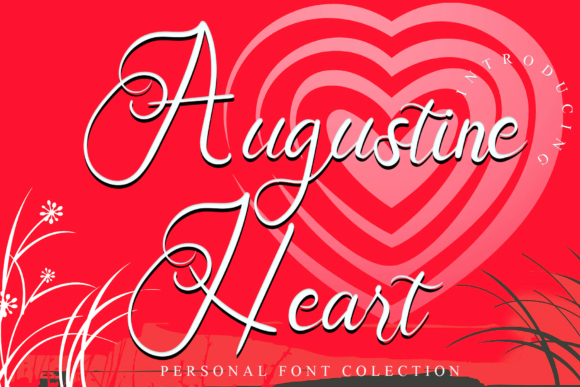
Augustine Heart is a Script Handwritten font that feels like a gentle smile in type form. It’s sweet and delicate—not fussy or overly ornate—but full of quiet personality. Think dainty loops, soft curves, and joyful rhythm. It doesn’t shout; it leans in. As a small business owner who designs most of my own marketing materials, I needed a premium font that could carry warmth without sacrificing polish. Augustine Heart did just that.
I started small: swapping out the generic script on my candle jar labels. Instantly, the brand felt more intentional. The name “Lavender & Light” flowed with grace instead of stiffness. Customers began commenting—not just on the scent, but how “inviting” the packaging felt. That’s typography at work: subtle, but powerful.
What makes Augustine Heart especially useful for real-world business use? First, its mood matches moments that matter—wedding stationery, boutique gift tags, handmade soap labels, café chalkboard menus, or even the “Thank You” note tucked into an online order. It’s not built for long paragraphs (it’s a display font, not body text), but it shines in short, meaningful phrases: product names, logo lockups, social media quotes, Instagram story highlights, or website banners.
I used it for my holiday gift box header—“Hand-Poured With Care”—and paired it with a clean sans serif (like Montserrat Light) for ingredient lists and care instructions. That pairing became my go-to: Augustine Heart for heart, the sans serif for clarity. It’s a simple font pairing that builds visual consistency across everything—from printed thank-you cards to digital ads—without needing a designer on retainer.
Readability matters, especially on small surfaces. Augustine Heart holds up beautifully on 2-ounce candle jars and 3×4-inch product stickers—as long as you keep sizing generous (14pt minimum for printed labels, 20pt+ for tiny tags). On mobile screens, it reads well in headlines and quote graphics, especially against soft backgrounds or muted photography. For social thumbnails, I avoid cramming too much text—just the brand name or one evocative phrase—and let Augustine Heart do the emotional lifting.
One thing I appreciated right away: the included OpenType features. Alternate characters and ligatures gave me flexibility—swapping in a prettier “&” or adjusting the flow between “o” and “v” in “love.” It made customizing templates feel personal, not templated. And yes—I double-checked the commercial license before adding it to my Canva brand kit and printing 500+ labels. Augustine Heart is a commercial font, fully cleared for product packaging, client work, and digital downloads. No surprises there.
It’s also versatile across formats. I used it in my café’s weekend menu board (printed on matte cardstock), layered it over flat-lay photos for Instagram posts, and even adapted it into a simple monogram for my business cards—just the first initial in Augustine Heart, centered above my name in a light serif. That tiny detail made the whole card feel more cohesive, more *me*.
Typography shapes first impressions faster than we realize. When someone sees your product on a shelf—or scrolls past your post in a feed—they decide in under two seconds whether your brand feels trustworthy, thoughtful, or worth a second look. Augustine Heart helps tilt that decision gently toward “yes.” It adds sincerity to a skincare label, charm to a bakery box, elegance to a coaching brand’s webinar banner. It doesn’t try to be everything—it’s a focused, joyful tool for moments where feeling matters most.
Of course, it’s not for every use case. I wouldn’t use Augustine Heart for shipping policy text or ingredient tables—those need crisp, highly legible sans serif fonts. But as a script font for emotional emphasis? Absolutely. It works best as supporting typography: guiding attention, reinforcing tone, and giving your brand a recognizable voice in visual form.
Before choosing Augustine Heart, I tested three other handwritten fonts—some too bouncy, some too fragile, others lacking OpenType support. Augustine Heart struck the right balance: delicate but dependable, romantic but not cloying, elegant but approachable. It felt like finding the right pair of shoes—comfortable, stylish, and ready for everyday wear.
If you’re refreshing your brand identity—even just one piece at a time—start with how your words look. Not just what they say, but how they land. Augustine Heart won’t fix a broken website or replace great customer service—but it will make your packaging feel like a gift, your social posts feel like a conversation, and your logo feel like it belongs to something real. And sometimes, that little lift in perception is exactly what helps a small business stand out, connect deeper, and grow with grace.
Whether you’re printing 20 labels or launching a full rebrand, Augustine Heart is a thoughtful, human-centered choice—a handwritten font that remembers people are on the other side of every package, every screen, every invitation.