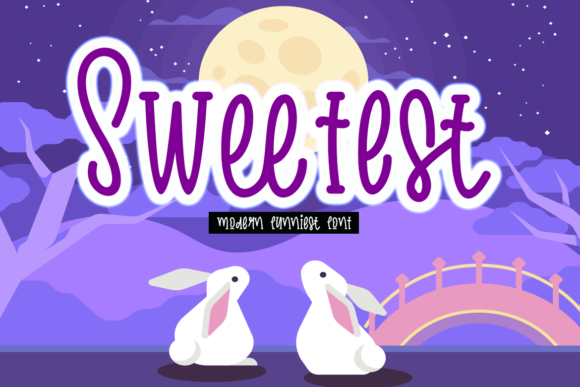
Sweetest Handwritten Font for Warm, Trustworthy Branding
As a small business owner who designs every label, writes every Instagram caption, and prints every thank-you card myself, I know how much a single font can shape how customers feel about my brand—even before they read a word. That’s why I reached for Sweetest the moment I saw it: a Script Handwritten typeface that feels like a friendly smile on paper. It’s not overly ornate or stiff—it’s soft, approachable, and full of quiet confidence. And yes, it works beautifully across real business materials, not just mockups.
Sweetest is a playful yet intentional handwritten font. Its strokes have gentle variation—some thick, some thin—but never chaotic. There’s warmth in the curves, sincerity in the slant, and just enough irregularity to feel human-made, not AI-generated. It doesn’t shout; it invites. That makes it ideal for businesses where trust, care, and authenticity matter most: children’s activity kits, handmade soaps, boutique baby clothing, educational printables, cozy cafés, and wellness coaching services.
I’ve used Sweetest as a display font for my own product labels—and it performed better than expected. On 2-inch sticker labels for soy candles, the letterforms stayed legible even at 14pt. On kraft paper packaging, its organic texture complemented the natural material instead of fighting it. And on mobile-optimized Instagram Stories, it held attention without sacrificing clarity. That’s rare for a script font. Most decorative typefaces blur or collapse at small sizes, but Sweetest was designed with practical scale in mind.
Here’s where it shines in everyday business use:
- Logos & branding marks: Perfect as a primary logo for a preschool, art supply shop, or family-friendly bakery—especially when paired with a clean sans serif for the tagline (think Montserrat or Inter).
- Packaging & product labels: Works beautifully on soap bars, tea tins, or cookie boxes—adding charm without compromising scannability at retail.
- Social media graphics: Stands out in Pinterest pins and Instagram carousels, especially for “how-to” posts or seasonal promotions (“Summer Camp Activity Pack!”).
- Website banners & hero text: Adds personality above the fold without slowing load times (it’s a lightweight OTF/TTF file).
- Printed collateral: Looks warm and cohesive on business cards, thank-you notes, and workshop handouts—no digital coldness.
Consistency is where Sweetest quietly builds trust. When your café menu, tote bag stamp, and email header all share the same handwritten rhythm, customers begin to recognize your voice—not just your name. That recognition compounds over time. A parent sees Sweetest on a printable coloring sheet, then spots it again on your Etsy banner and your local farmers’ market tent—and something clicks: *This feels familiar. This feels safe.* That’s brand alignment in action.
It’s important to be realistic: Sweetest isn’t meant for body text or dense paragraphs. Use it as a headline, logo, accent phrase, or short callout—never for ingredient lists or terms & conditions. For those, pair it thoughtfully. My go-to pairing is Inter (a free, highly readable sans serif) for supporting text. The contrast between Sweetest’s expressive curves and Inter’s clean neutrality creates visual hierarchy without tension. If you prefer serifs, try Playfair Display for headings alongside Sweetest for subheads—it adds elegance while keeping warmth intact.
Before rolling Sweetest across your entire brand, test it in context. Print a mockup of your candle label at actual size. View your Instagram post thumbnail on a phone screen. Paste your shop name into a Canva banner and zoom out to 25%. Does it still feel like *you*? Does it still read clearly? Small adjustments—tightening letter spacing slightly, increasing stroke contrast for dark backgrounds—can make a real difference in real-world legibility.
Licensing matters—especially if you’re selling physical products or digital templates. Sweetest is a commercial font, meaning you’ll need an extended license for use on merchandise, client work, or editable design assets like Canva templates. Check the vendor’s license terms before adding it to your Shopify product page or bundling it with a printable planner. Using it without proper rights may seem minor, but it protects both your business and the designer who created this thoughtful Script Handwritten typeface.
For handmade product sellers, Sweetest bridges craft and professionalism. It says, *I made this with care—and I want you to feel that care when you hold it.* A boutique owner told me she switched from a generic brush font to Sweetest for her baby milestone cards, and within two weeks, customers started commenting, “Your packaging feels so personal.” That’s not magic—it’s smart typography meeting genuine intent.
If your brand speaks to families, educators, creatives, or anyone who values warmth over polish, Sweetest isn’t just another font—it’s a tone-of-voice tool. It helps your website feel welcoming, your labels feel trustworthy, and your social feed feel authentically *yours*. And in a world of algorithm-driven feeds and crowded marketplaces, that kind of quiet consistency is one of the most powerful branding decisions you can make.