Jelly Drink: A Sweet, Joyful Handwritten Font for Crafters
If you’ve ever spent hours tweaking a label design only to realize the font feels stiff or impersonal—welcome. I’ve been there too. That’s why Jelly Drink instantly stood out in my font library: it’s not just another script—it’s a warm, expressive, and commercially smart choice for anyone making physical or digital craft products. As a small shop owner who designs printable invitations, candle labels, boutique tags, and SVG files for Cricut and Silhouette users, I need fonts that balance charm with clarity—and Jelly Drink delivers both.
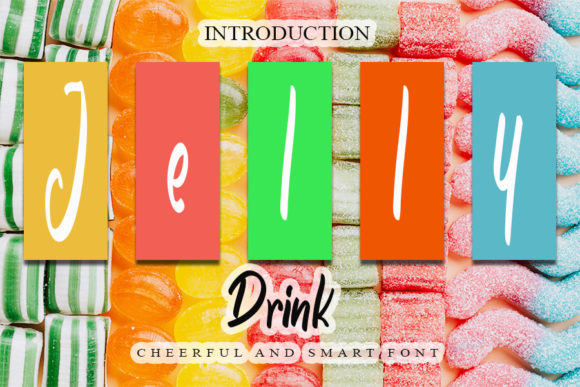
This Script Handwritten typeface has thin, graceful letterforms that dance across the page without sacrificing legibility. Its sweetness isn’t cloying; it’s sincere—like handwriting from someone who cares about every curve and connection. The letters flow naturally, with subtle bounce and rhythm that make even simple words feel intentional and joyful. It’s not overly ornate, so it avoids the “too busy” trap many decorative fonts fall into—especially important when cutting vinyl or printing tiny sticker text.
I use Jelly Drink most often for short, high-impact phrases: product names on apothecary-style candle jars, “Thank You” on handmade soap tags, “Welcome” on rustic wedding welcome boards, and “Hand-Poured” on artisanal bath bomb packaging. Its delicate weight holds up beautifully at sizes as small as 10pt on printed cards—and scales elegantly up to 120pt for wall art or large-format signs. For digital printables like planner stickers or printable quote art, Jelly Drink adds personality without overwhelming layout space.
Readability matters—not just for customers, but for your tools. I tested Jelly Drink on my Silhouette Cameo 4 and Cricut Maker 3: it cuts cleanly at 14pt and above on standard vinyl, and the letter spacing stays open enough to prevent weeding headaches. On matte paper labels? Crisp and charming—even at 8pt, if used sparingly (think “Made With Love” beneath a logo). For greeting cards or bridal shower invites, I pair it with a clean sans serif like Montserrat or Poppins for body text—Jelly Drink shines as the headline, while the supporting font keeps things scannable and professional.
Seasonal projects are where this font truly sings. Last Christmas, I designed holiday mugs and tote bags using Jelly Drink for phrases like “Cozy & Cinnamon” and “Joyful Moments Only”—the lightness of the strokes gave them a handmade, heartfelt vibe that resonated with buyers. For spring markets, I used it on seed packet labels (“Heirloom Lavender,” “Sunshine Marigold”) and found customers consistently commented on how “friendly” and “approachable” the typography felt. That emotional resonance? It translates directly to perceived quality—and repeat sales.
Wedding stationery is another sweet spot. Jelly Drink works beautifully for save-the-dates, menu cards, and signage—especially when paired with a soft serif like Playfair Display or a minimalist sans for contrast. Because it’s not overly formal or fussy, it fits modern farmhouse, botanical, and even minimalist weddings. I avoid using it for full paragraphs (it’s a display font, not a text face), but for names, dates, and key phrases? It adds warmth and intentionality that generic scripts simply can’t match.
What makes Jelly Drink especially practical for sellers is its thoughtful construction. It includes standard OpenType features—ligatures for smoother connections between letters like “fi” and “fl,” alternate characters for variety (great when designing multiple variations of the same printable), and basic swashes for subtle flair on titles or headers. It supports Latin-based languages, so if you sell internationally or create bilingual baby shower invites, you’ll appreciate the extended character set. Files come in OTF and TTF formats—fully compatible with Canva, Adobe Creative Suite, Silhouette Studio, Cricut Design Space, and Microsoft Word.
Font pairing is where Jelly Drink really flexes its versatility. Think of it as the expressive voice in your design duo: let it speak the emotion, while a grounded companion handles the facts. Try it with:
- A geometric sans serif (like Raleway or Nunito) for modern product labels and digital templates;
- A gentle serif (like Cormorant Garamond or Lora) for elegant wedding stationery or literary-themed wall art;
- A bold condensed sans (like Bebas Neue or Oswald) for contrast on t-shirt designs or market banners—where Jelly Drink becomes the accent, not the anchor.
One thing I always double-check before listing any font-based product: licensing. Jelly Drink is a commercial font, meaning you’re fully covered to use it in physical goods (stickers, mugs, apparel), digital downloads (printables, Canva templates, SVG bundles), and client work—as long as you’re not reselling the font file itself. No hidden restrictions, no “personal use only” surprises. That peace of mind lets me focus on creating—not worrying about compliance.
Whether you’re hand-lettering mockups for Etsy listings, prepping files for local print shops, or building cohesive brand assets for your small-batch skincare line, Jelly Drink helps your products feel human, intentional, and memorable. It doesn’t shout—but it lingers. And in a crowded marketplace, that quiet confidence is exactly what makes customers pause, connect, and choose your handmade item over the next one.
So next time you’re choosing a font for a new product launch, seasonal collection, or client project—reach for something that does more than look pretty. Reach for Jelly Drink: a joyful handwritten font built for makers who value both beauty and function.